What to Expect in Phlebotomy Class: Your First Day, From the People Who Teach It
Every class we run starts the same way: a room full of people trying to look calmer than they feel. So if you’ve enrolled (or you’re about to) and you’re wondering what to expect in phlebotomy class, let us walk you through it — day by day, from the instructor’s side of the room.
Short version: you’ll be busier than you expect, less scared than you expect, and more capable by Sunday afternoon than you believed on Saturday morning.
What to Expect in Phlebotomy Class, Day by Day
Day one: learning the craft — and your first sticks
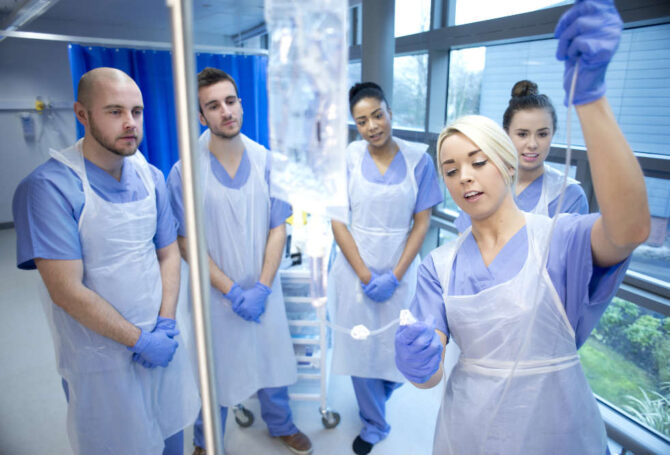
Our accelerated course runs as a two-day weekend or three-day weekday format, and every day has the same rhythm: lecture in the first half, hands-on lab in the second. Day one’s lecture covers general anatomy and physiology, phlebotomy techniques, the equipment you’ll use, and how to work with different kinds of patients — including the nervous ones.
Then you head to lab, and here’s the part that surprises people: you start drawing on day one. Not on people — on simulation arms, realistic practice arms with veins that fill and give the same feedback a real draw does. You’ll learn to tie a tourniquet, feel for a vein (you find veins by touch more than sight — most new students don’t know that), set your angle, and make the stick. By the end of day one, the equipment in your hands feels familiar instead of foreign.
Day two: live draws
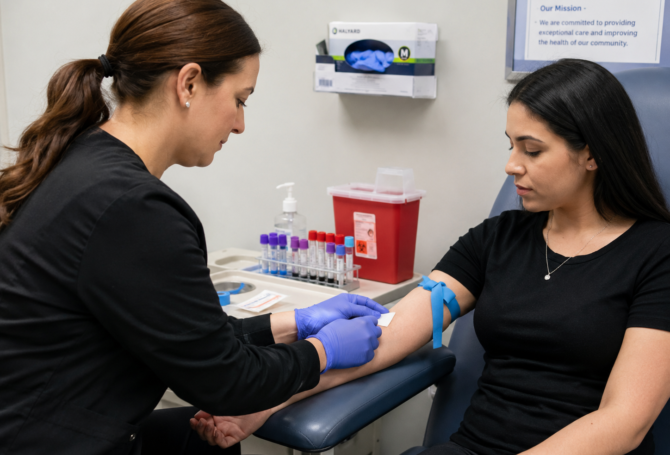
This is the day everyone is nervous about, so let’s be direct about how it works. After more lecture — workplace safety, OSHA guidelines, safer needle devices — students begin live draws on each other, under instructor supervision, one step at a time. Your instructor is right there, checking your angle before the needle moves.
Two things we tell every class. First, being a “patient” for your classmates is not mandatory — if you prefer not to be drawn on, you won’t be. Second, almost everyone’s hands shake a little on their first live stick, and almost everyone is amazed how quickly the second and third feel routine. With 10 to 15 students per class, you get real repetitions, not a turn or two.
The final stretch: your practical exam
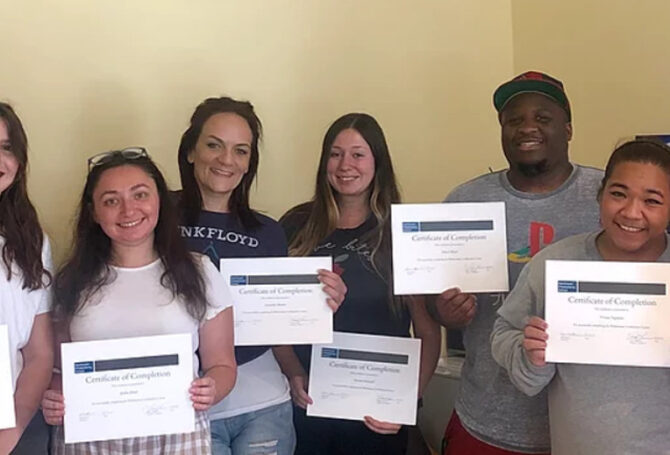
Before the course ends, you’ll sit down one-on-one with your instructor for a practical exam covering the procedures you’ve learned. It’s thorough but not a trick — by then you’ve done everything on it several times. After the course, you take the written national certification exam while the material is fresh. Here’s our guide to the certification process if you want the details on that step.
What Should You Bring (and Wear)?
Your enrollment confirmation will list anything specific for your location, but the universal advice is simple: comfortable clothes you can move in, closed-toe shoes, something to take notes with, and lunch or snacks — the days are full. Bring questions, too. Small classes exist so you can ask them.
"What If I’m Squeamish?"
We hear this constantly, and here’s the truth from years of teaching: squeamishness is mostly unfamiliarity, and the course is designed to dissolve it in stages. Slides before sim arms, sim arms before live draws, one skill stacked on the last. Students who nearly didn’t enroll because of nerves are often the most careful, most attentive phlebotomists in the room by the end. If needles made you hesitate but healthcare still pulls at you, that’s not a disqualification — it’s a normal starting point.
What Happens After Class?
You leave with hands-on experience, a completed practical exam, and a clear path: pass the written exam, handle any state paperwork, and start applying. The job market is on your side — the Bureau of Labor Statistics projects 7% growth for phlebotomists from 2025 to 2035, much faster than average, with about 18,000 openings a year. Career guidance comes with our course, and you keep lifetime access to the classroom materials, so the support doesn’t end when the class does. Here’s the full path from class to first job.
Frequently Asked Questions
Do I have to get my blood drawn in phlebotomy class?
No. Practicing draws on classmates is how everyone learns, but being a “patient” yourself is voluntary in our classes.
Is phlebotomy class hard?
It’s full and fast-paced, but it’s built for beginners — no science background needed. The hands-on structure does the heavy lifting: you don’t memorize a blood draw, you practice one.
How many students are in a class?
Usually 10 to 15. That’s deliberate — small enough that an instructor watches and corrects your technique on every practice draw.
What do I need before enrolling?
Be at least 18 with a high school diploma or GED. That’s the whole list for most students. Here’s how long the whole process takes.